10 Easy Dog Tricks to Teach at Home
Teaching tricks is not just about showing off at family gatherings. Trick training gives your dog mental exercise, builds confidence and strengthens the bond between you. Many tricks also have practical uses: a dog that knows “touch” can be guided easily, and “settle” helps when guests arrive. The ten tricks below are suitable for most dogs and can be taught at home with a pocketful of treats and a few minutes a day.
Before You Start: Training Basics
- Use small, tasty treats. Pea-sized pieces of something your dog loves work best.
- Keep sessions short. Three to five minutes, two or three times a day, beats one long session.
- Mark the moment. Say “yes” or use a clicker the instant your dog does the right thing, then reward.
- Train in a quiet place first, then practise in busier settings.
- End on a success so your dog finishes happy.
If your dog does not yet know basic cues like sit and down, start with our guide on training your dog at home.
1. Touch (Hand Target)
Hold your open palm a few centimetres from your dog’s nose. Most dogs will sniff it. Mark and reward the moment the nose touches your hand. Repeat, then add the word “touch”. Gradually move your hand to different positions. This trick is useful for guiding your dog, calling it away from distractions and building confidence in shy dogs.
2. Shake Hands
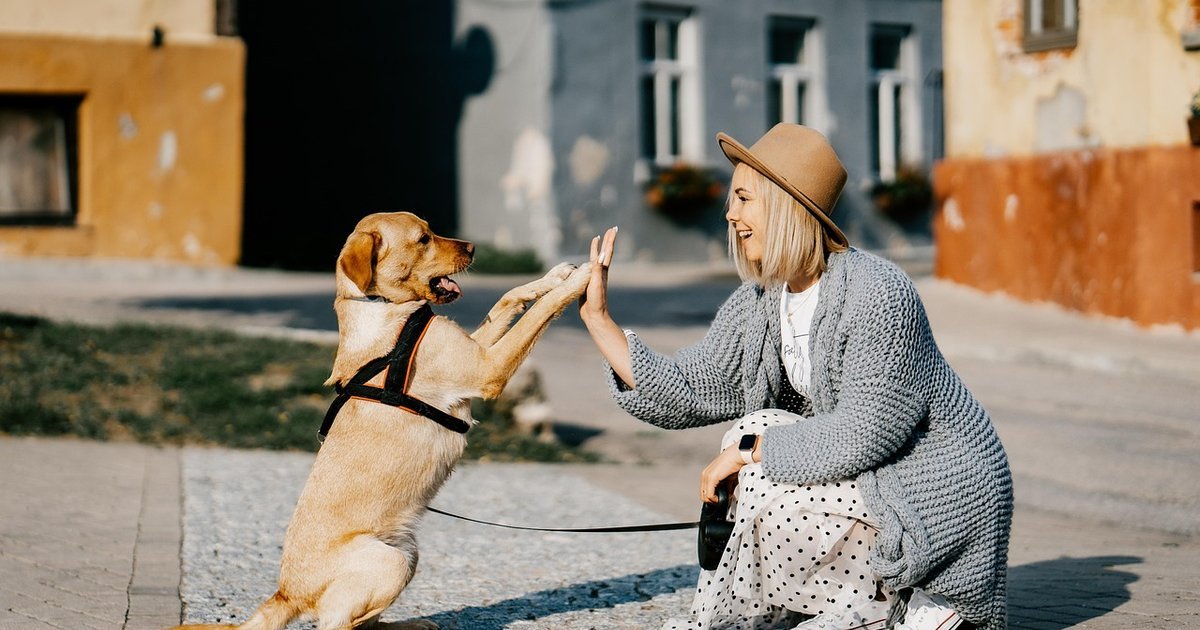
Ask your dog to sit. Hold a treat in a closed fist near its chest. Many dogs will paw at your hand. Mark the moment the paw lifts and reward. Then offer your open hand under the paw and say “shake”. Gradually require the paw to rest on your hand before rewarding.
3. Spin
With your dog standing, hold a treat at its nose and slowly lure it in a circle. Mark and reward when it completes the turn. After several repetitions, make the hand movement smaller and add the word “spin”. Teach the other direction with a different word, such as “twirl”.
4. Bow
With your dog standing, hold a treat at its nose and move it down towards the floor between the front paws. As the front end lowers and the back end stays up, mark and reward. If your dog lies down completely, try placing your other hand gently under its belly to support the back end at first.
5. Settle on a Mat
Place a mat or towel on the floor. Reward your dog for stepping on it, then for sitting or lying on it. Gradually reward longer periods of calmness on the mat. This is a wonderful trick for mealtimes, visitors and cafes, and it helps dogs learn to relax.
6. Play Dead (Bang!)
Start with your dog lying down. Lure it onto its side by moving a treat from its nose towards its shoulder. Mark and reward when it rolls onto its side. Add a cue such as “bang” with a finger gesture once the movement is smooth.
7. Roll Over
Once your dog lies on its side reliably, continue the lure over its back so it rolls all the way. Some dogs dislike lying on their backs, so only teach this to dogs that are comfortable. Use a soft surface.
8. Find It
Show your dog a treat, then toss it a short distance while saying “find it”. Gradually hide treats in easier, then harder places. Sniffing games are mentally tiring and great for rainy days or older dogs that cannot run much.
9. Back Up
Stand in front of your dog in a narrow hallway. Step towards it slowly. When it takes a step backwards, mark and reward. Build up to several steps and add the cue “back”. This helps dogs become more aware of their back legs.
10. Leave It
Hold a treat in your closed hand. Let your dog sniff and lick. The moment it pulls away, mark and reward with a different treat from your other hand. Add the word “leave it” and build up to treats on the floor. This trick can genuinely save your dog’s life if it tries to pick up something dangerous.
Troubleshooting
- My dog loses interest quickly: use better treats, train before meals and keep sessions shorter.
- My dog gets over-excited: slow down, use calmer praise and practise in a quieter room.
- My dog only does the trick for food: gradually reward every second or third repetition, and use play or praise as rewards too.
- My dog seems confused: go back a step. Break the trick into smaller pieces.
Tricks for Puppies and Senior Dogs
Puppies have short attention spans, so stick to simple tricks like touch, find it and settle. Senior dogs benefit from low-impact tricks that keep their minds active without stressing joints. Skip roll over and bow if your dog has arthritis, and focus on nose games instead.
Make Training Part of Daily Life
You do not need a dedicated training hour. Ask for a trick before dinner, before opening the door for a walk or during an advert break. Little and often builds strong habits. Training also complements physical activity; our dog exercise daily needs guide explains how much activity different dogs need.
Using Tricks to Build Confidence
Shy or anxious dogs often grow in confidence through trick training, because they learn that their actions bring good results. Choose tricks that involve gentle movement and lots of easy wins, such as touch and find it. Practise in calm places first. Over time, a familiar trick can also help a nervous dog cope in new situations, giving it something positive to focus on.
FAQ
How long does it take to teach a dog a trick?
Simple tricks like touch or shake can be learned in a few days of short practice. More complex tricks may take weeks.
Can older dogs learn new tricks?
Yes. Dogs can learn throughout their lives. Choose tricks that suit their physical comfort.
Should I use a clicker?
A clicker can make timing more precise, but a short marker word like “yes” works well too.
What treats are best for training?
Small, soft, tasty treats your dog loves. Count them as part of the daily food allowance to avoid weight gain.