Intelligent Indoor Cats Ranked
If you’re searching for the most intelligent indoor cats to accompany your family, you’ll want a companion that can learn tricks, solve puzzles, and communicate its moods quickly. Cats are not only beloved pets but also intelligent animals with diverse cognitive abilities. In this post, we focus on which breeds stand out as the smartest indoor cats. We’ll cover their learning style, problem‑solving skills, social behavior, and practical training tips to help you create a joint life filled with stimulation and bonding.
Intelligent Indoor Cats Ranked by Learning Ability
Among the smartest cats, the Siamese often top the list, thanks to their communicative vocalizations and acute curiosity. They readily associate sounds with actions and respond to commands more reliably than many other breeds. Bengal cats combine wild instincts with house‑friendly quirks; they thrive on puzzle feeders and quickly master games that require memory and strategy. The Maine Coon, a larger breed, demonstrates remarkable spatial awareness—its ability to navigate complex litter boxes and remember locations showcases strong memory skills. These three breeds—Siamese, Bengal, and Maine Coon—offer distinct manifestations of intelligence and are ideal for families seeking a thoughtful companion. Siamese cat, Bengal cat, and Maine Coon cat each provide unique cognitive strengths.
Intelligent Indoor Cats as Problem Solvers
Cat cognition research from Cornell University College of Veterinary Medicine demonstrates that indoor cats can solve complex tasks, such as retrieving items hidden behind a box or learning sequences of LED lights to gain a treat. Building on this evidence, you can engage your feline’s logical mind with a range of enrichment activities:
- Box circuits that require the cat to jump, crawl, and use claws to reach a reward.
- Puzzle feeders that demand successive steps to access food.
- Interactive toys that prompt the cat to click or paw at moving targets.
- Training sessions that blend scent trails with auditory cues.
- Social games where the cat learns to cooperate with a human partner.
These activities not only stimulate the cat’s problem‑solving instinct but also build a stronger human‑cat bond, as the shared success fosters trust and enrichment.
Intelligent Indoor Cats and Social Interaction
Beyond problem solving, intelligent indoor cats exhibit remarkable social cognition. Research published by the American Psychological Association has identified that certain breeds, such as the Bengal and the Persian, display heightened sensitivity to human facial expressions and vocal tones. They often modulate their behavior—approaching or retreating—based on the owner’s emotional state. This emotive responsiveness, or empathy, is a key component of cat enrichment. It ensures that the feline is not only mentally stimulated but also emotionally integrated into the household.
To nurture this social aptitude, provide consistent positive interactions: affectionate petting, gentle talking, and eye contact during quiet moments. Enrichment can also involve time shared in interactive play, which reinforces communication patterns between you and your cat.
Intelligent Indoor Cats and Training Tips
Training a smart indoor cat involves patience, consistency, and the use of enrichment tools. Clicker training is one effective method; pairing a distinct click sound with a treat creates a clear association that the cat can understand. Start with simple commands like “sit” or “come” and gradually increase complexity.
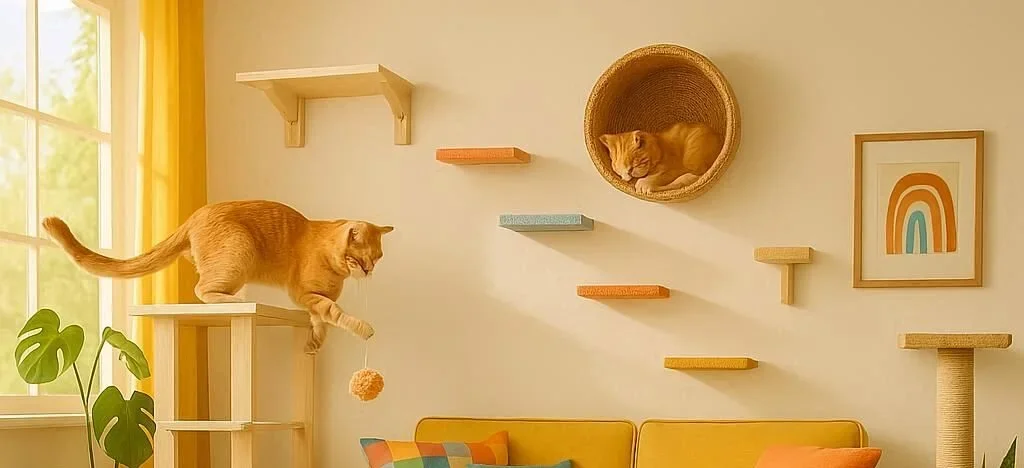
Incorporate environmental enrichment, such as perching structures and vertical play areas (“warmth towers”) that capitalize on the cat’s natural hunting instincts without compromising indoor safety. Also, rotate toys regularly to maintain novelty, as intelligent cats benefit from continuous mental challenges.
Remember, training should always be a positive reinforcement process. Avoid punitive measures—negative reinforcement can diminish trust and reduce the cat’s willingness to learn. Instead, celebrate small victories and progressively push the limits of their skill set.
Finally, consult reputable resources like ASPCA—Animal Welfare Organization, which provide extensive guidelines on effective training and enrichment for cats.
Discover more about Intelligent Indoor Cats and give your feline the enrichment it deserves—contact us today to learn tips, breed insights, and personalized training plans!
Frequently Asked Questions
Q1. How do I determine if my cat is intelligent?
If your cat quickly learns new tricks, solves puzzles, or shows curiosity by exploring new toys, it’s exhibiting high intelligence. Watch for signs such as problem-solving, remembering hidden treats, or mimicking commands. Consistently supportive training will reveal strengths and keep up engagement.
Q2. Which breeds are considered the smartest indoor cats?
Siamese, Bengal, and Maine Coon lead rankings due to their vocal communication, spatial awareness, and puzzle-solving prowess. These breeds adapt quickly to training and enjoy interactive enrichment. However, individual variation can be just as important as breed traits.
Q3. What training methods work best for intelligent cats?
Clicker training and positive reinforcement are most effective. Pair a distinct click sound with a treat, start with simple commands like “sit” or “come,” and progressively increase complexity. Keep sessions short and rewarding.
Q4. How can I keep an intelligent cat engaged indoors?
Use puzzle feeders, box circuits, and interactive toys that require multiple steps to access treats. Rotate toys regularly and create vertical play spaces to satisfy hunting instincts. Occasional scent or sound cues further stimulate their cognition.
Q5. Are these breeds family-friendly with young children?
Yes, Siamese, Bengal, and Maine Coon are generally playful and tolerant of kids, provided they understand gentle handling. Supervise play sessions, encourage respectful behavior, and reward calm interactions to maintain harmony. Their social intelligence helps them read children’s moods and adapt accordingly.