Stylish Ways Hide Pet Supplies
Keeping your living space stylish while accommodating your furry friends can feel like balancing on a tightrope. One clever approach is to hide pet supplies—such as food bowls, toys, and grooming tools—in plain sight, so they remain accessible yet discreet. By using multifunctional furniture, custom cabinetry, and décor that masks storage, you can create a seamless blend of functionality and aesthetics. This article explores practical, chic strategies for hiding pet supplies in your home, ensuring both you and your pets enjoy a tidy, beautiful environment.
Stylish Pet Furniture Solutions
When the goal is to hide pet supplies, the first place to look is furniture. A sofa with built‑in pet storage, for instance, hides a soft bowl or a set of interactive toys behind a fabric‑covered compartment. Architectural Digest showcases numerous pieces that combine sleek design with hidden compartments, making them ideal for pet owners who value style. Another option is a modern ottoman that folds open to reveal a cavity for grooming mitts or a stash of treats. These solutions keep surfaces clutter‑free while ensuring that items remain within arm’s reach.
Beyond sofas, coffee tables are an often overlooked canvas. A coffee table with a lift‑up panel can conceal food bowls, a litter box, or a bundle of chew toys. Look for tables that feature a slide‑out tray or a detachable drawer; these design elements allow you to pull out supplies without disturbing the table’s aesthetic. When choosing furniture, prioritize durable materials that can withstand the occasional paw or accidental splash. A subtle, neutral finish ensures the furniture remains a design centerpiece rather than a pet accessory.
Outdoor patio furniture can also play a role in secret storage. For example, an outdoor chaise lounge with a recessed shelf can hide wind‑resistant pet beds, or a weather‑proof storage bin with a decorative lid can conceal blankets and toys. National Geographic emphasizes the importance of choosing products that withstand varying climates, ensuring longevity and safety for your pets. By integrating subtle storage into outdoor pieces, you extend the home’s chic appeal beyond indoor boundaries.
Clever Cabinetry and Custom Shelving
Cabinetry remains one of the most versatile approaches to hiding pet supplies. Low‑profile cabinets that blend with the wall color can fit under stairs, behind a fireplace, or in a nondescript side room. Within these cabinets, pull‑out trays keep bowls and grooming tools neatly organized and hidden from view. To enhance visibility, add a small window or cut‑out that displays a patterned mat or a decorative pet toy, giving the storage sense of depth without compromising secrecy.
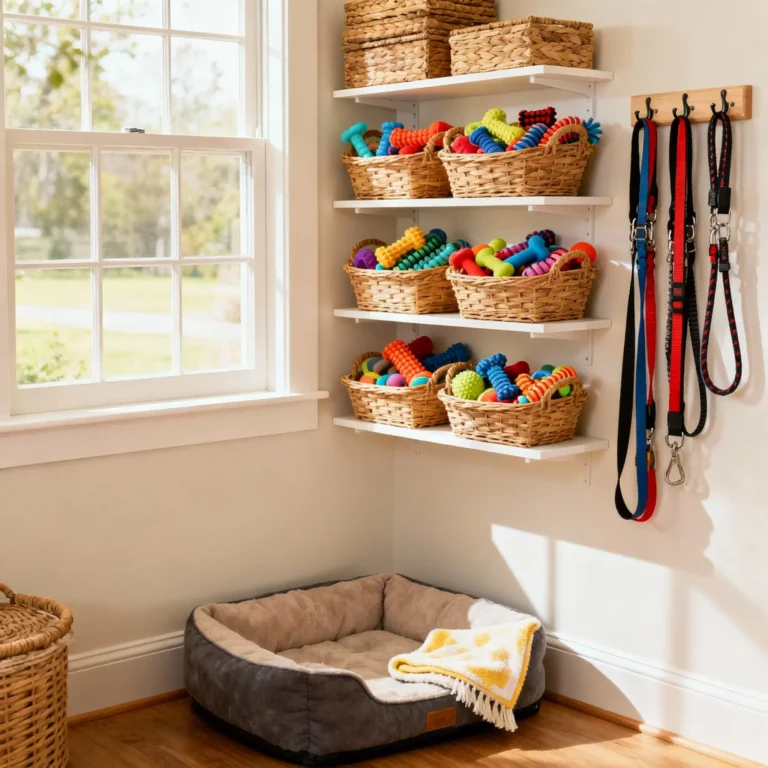
Custom shelving is especially useful in entryways or hallways. By installing a tall, narrow unit that uses a tiered layout, you can separate a litter box from a set of food containers in just a few inches. Using a removable shelf within the unit allows you to swap in a cozy pet bed or a decorative plant at a glance. For households that prefer a minimalistic look, a single, long cabinet with a hidden push‑button reveal can keep food and water bowls out of sight yet still easily accessible.
Here are a few creative shelving ideas that keep your pet supplies hidden yet elegant:
- Under‑Stair Storage: Repurpose the space beneath stairs for a narrow cabinet that houses food, litter, and toys.
- Kitchen Island Trays: Attach a pull‑out tray to a kitchen island where pet bowls can rest, while the rest of the space serves for cooking.
- Wall‑Mounted Racks: Install a wall rack that slides open to reveal a hidden cavity for grooming tools.
- Bookcase Convert: Convert a large bookcase into a multi‑compartment unit with a concealed layer for pet supplies.
When designing custom shelving, the choice of wood grain or laminate finish can reinforce a cohesive look throughout the house. Light‑colored surfaces tend to make hidden compartments appear more integrated, while darker tones add a dramatic flair that masks clutter effectively. Regardless of the chosen style, ensure that the shelves are sturdy enough to support your supplies without wobbling.
Transforming Everyday Items into Hidden Storage
Many everyday household items can be repurposed as stylish pet supply repositories without compromising aesthetic integrity. Consider a decorative rolling cart that can slide under a rug or behind a furniture piece; these carts can hold catnip, chew toys, or grooming kits. By selecting a cart with a sleek finish and minimalistic silhouette, the cart can serve as both a decorative accent and functional storage. Additionally, decorative baskets with a fabric lining not only hide pet bedding but also add a textured element to a living or dining area.
Another simple yet effective method is to use beverage cans as temporary bowl storage. By wrapping a plastic or ceramic bowl in a waterproof tray and placing it inside a cleaned can, you can keep treats concealed in a coffee table, ensuring they’re never on a countertop where they might spill. For an extra touch, paint the can to match the surrounding décor, turning it into a subtle decorative feature. This technique is particularly handy for households with limited space, as it keeps the supplies compact and out of sight.
Closets offer an abundant source of hidden storage. Utilizing the door’s underside or a back panel to install an open‑slide cabinet keeps all pet needs easily reachable. In addition to shelving, hanging organizers inside a wardrobe can hold small toys, leashes, or grooming brushes. If closet space is limited, try adding an overdoor rack that holds a collapsible bed or a lightweight food crate. These closet‑based solutions ensure that pet supplies remain well organized while keeping living areas clutter‑free.
When using everyday items for hidden storage, always prioritize safety. Avoid sharp or small components that could be ingested by pets; ensure all items are securely attached and free of loose parts. Regularly inspecting the storage solutions for wear and tear, especially the hinges and latches, guarantees that they remain functional and safe for your companions.
Integrating Pet Storage into Room Themes
A cohesive visual theme strengthens the illusion that pet supplies are an intentional design element rather than an afterthought. In a rustic living room, for instance, a reclaimed wood crate can hold a cat’s feeding station while echoing the natural aesthetic of the room. By lining the crate with a moss‑green fabric, the storage blends with the green plants and muted tones, making it appear as a deliberately placed accent.
Modern industrial spaces benefit from metal shelving with brushed steel finishes; when hidden with a smooth, matte laminate, the area can house bowls, toys, and a dog’s water bottle. A dark, matte finish protects the metal from scratches, while the sleek lines mirror the room’s minimalist ethos. Additionally, using glass compartments allows the lighting to illuminate pet supplies, creating a subtle spotlight effect that reinforces the décor’s sophistication.
Bedrooms that aim for a calm retreat can hide supplies under a built‑in headboard. A storage panel behind a headboard not only keeps a small pet bed out of sight but can also hold a pet’s grooming kit tucked away. The panel can be finished in the same fabric or trim as the headboard, making the hidden compartment appear integral. For those who prefer a more formal home, a velvet‑lined wardrobe with concealed pull‑outs can keep accessories tidy while preserving a grand aesthetic.
Each room offers unique opportunities to hide pet supplies while maintaining a polished look. By carefully selecting storage options that match the room’s color palette, material choices, and design elements, you ensure that pet supplies are not an eyesore but a continuation of the home’s narrative.
In conclusion, stylish ways to hide pet supplies involve thoughtful integration of furniture, custom cabinetry, everyday items, and theme‑aligned storage solutions. By keeping the supplies concealed yet accessible, you create an environment that feels organized, intentional, and welcoming for both humans and pets. Embrace the opportunity to design a home that showcases your taste while providing a comfortable, secure space for your animal companions. It’s time to put the creative power to work and begin hiding pet supplies in plain sight—because a well‑styled home and a happy pet are a match made in design heaven.
Frequently Asked Questions
Q1. What are the safest materials for pet supply storage?
Safe materials are those that are non‑toxic, durable, and easy to clean, such as high‑grade sealed wood, stainless steel, or BPA‑free plastic. Avoid porous surfaces that can harbor bacteria or absorb odors. Regular cleaning with pet‑safe disinfectants ensures the storage stays hygienic.
Q2. How can I keep pet bowls from slipping while hiding them?
Use non‑slip pads or silicone rings under bowls within hidden compartments. Additionally, choose bowls with weighted bottoms to reduce movement. Installing a slight lip or a shallow tray also stabilizes the bowls during use.
Q3. Are there hidden storage options suitable for large dogs?
Yes—cabinetry with deeper pull‑out drawers can store large water jugs, travel crates, or bulky grooming kits. Outdoor hiding spots, such as garden sheds or pet tents with built‑in compartments, also provide ample space for larger breeds.
Q4. Can I use my existing furniture to hide pet supplies?
Many existing pieces can be adapted. For example, a coffee table with a hinged lid or a bookshelf with a hidden panel works well. Adding a discreet pull‑out tray or a secondary shelf can create an efficient stealth storage zone.
Q5. How often should I clean hidden pet supply areas?
Clean hidden areas at least once a month to prevent odor build‑up and bacterial growth. For high‑traffic or allergen‑prone spaces, a bi‑weekly schedule is advisable to keep both your pets and your home healthy.