Indoor Cat Enrichment: 15 Ideas to Keep Cats Happy
Keeping a cat indoors protects it from traffic, fights and many infectious diseases, but it also means you become responsible for meeting its natural needs. Cats are hunters by design. They want to stalk, chase, pounce, climb, scratch and explore. When an indoor cat has nothing to do, boredom can show up as overeating, night-time zoomies, scratching furniture or even stress-related health issues. Enrichment is the answer, and much of it costs very little.
Why Enrichment Matters for Indoor Cats
Enrichment means adding variety and challenge to your cat’s environment so it can express normal behaviours. A well-enriched cat is usually calmer, more confident and less likely to develop problem behaviours. You do not need a big house – thoughtful use of vertical space, play and food can transform even a small flat.
Play and Hunting Ideas
1. Daily Wand-Toy Sessions
A feather or fabric toy on a stick is the best tool for interactive play. Move it like prey: hiding behind furniture, darting away, pausing, then fluttering. Two or three ten-minute sessions a day can make a big difference.
2. End Play With a “Catch”
Let your cat catch the toy at the end of a session, then offer a small meal or treat. This mirrors the hunt-catch-eat cycle and helps your cat settle afterwards.
3. Rotate Toys
Cats lose interest in toys that are always lying around. Keep most toys in a box and bring out a different few each week to keep them exciting.
4. Solo Toys
Small balls, crinkle toys and lightweight mice give your cat something to bat around when you are busy. Always remove string, ribbon and elastic after play, as these can be dangerous if swallowed.
Climbing and Territory
5. Cat Trees and Shelves
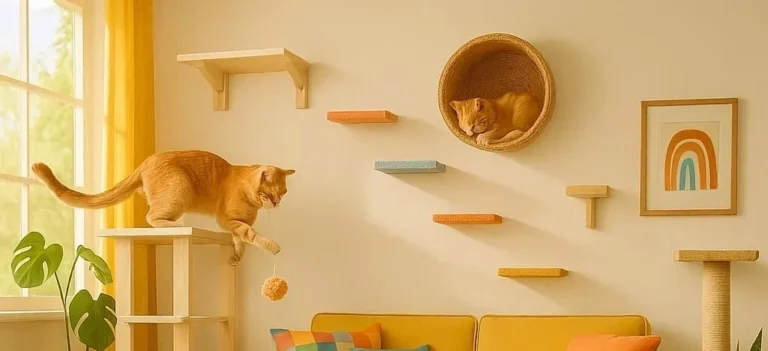
Cats feel safe when they can observe the world from above. A sturdy cat tree or a set of wall shelves creates a “cat highway” around the room.
6. Window Perches
A secure perch by a window offers hours of “cat TV” – birds, people and passing traffic. Make sure windows are screened or kept closed, especially in high-rise flats.
7. Hiding Spots
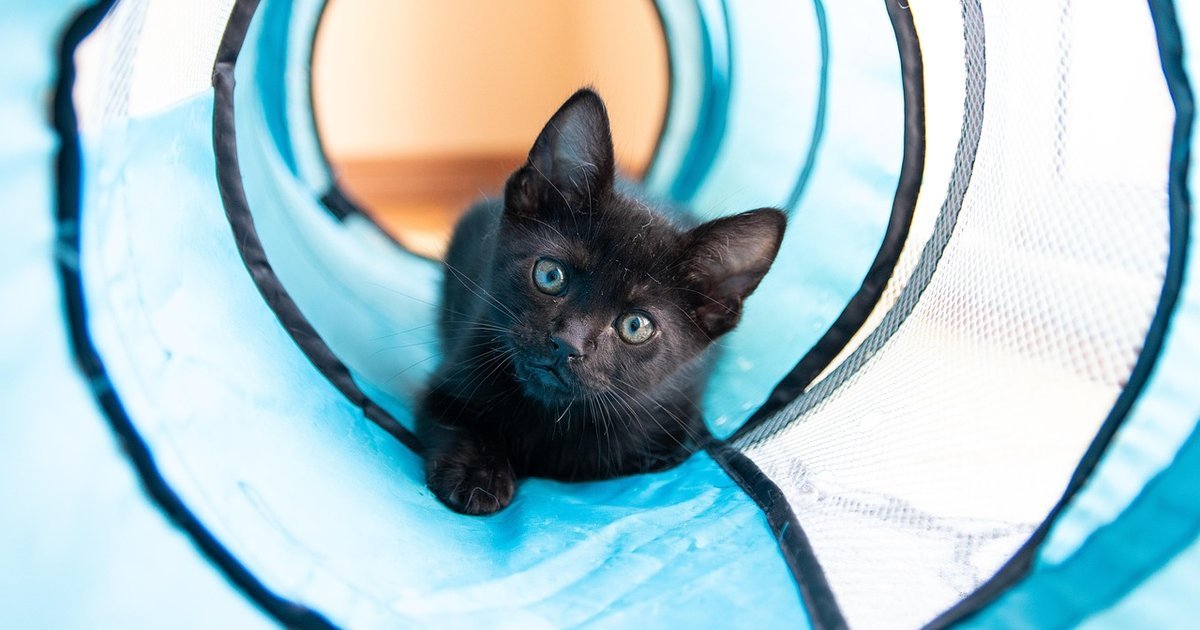
Cardboard boxes, covered beds and tunnels give your cat places to retreat when it wants privacy. Hiding is a normal coping behaviour, not a sign of unhappiness.
Food-Based Enrichment
8. Puzzle Feeders
Food puzzles make your cat work for its meals, slowing down fast eaters and providing mental exercise. Start with easy puzzles and increase difficulty as your cat learns.
9. Scatter Feeding
Hide small portions of dry food around the house so your cat can “hunt” for its meal.
10. Multiple Small Meals
Cats naturally eat several small meals a day. Our guide on how often to feed your cat explains how to divide the daily allowance into a routine that suits indoor life.
Sensory Enrichment
11. Safe Cat Grass
Many cats enjoy nibbling cat grass, a safe grass you can grow in a pot. It provides interest and something safe to chew instead of houseplants.
12. New Scents
Bring in safe novel smells – a cardboard box from the shop, a paper bag or a cloth with catnip. Some cats react strongly to catnip, while others ignore it completely.
13. Gentle Sounds
Soft background music or the sound of birds playing quietly can provide mild stimulation. Watch your cat’s reaction and switch it off if it seems stressed.
Social and Training Enrichment
14. Clicker Training
Cats can learn tricks like high-five, sit or coming when called using a clicker and treats. Training builds confidence and strengthens your bond.
15. Quality Time
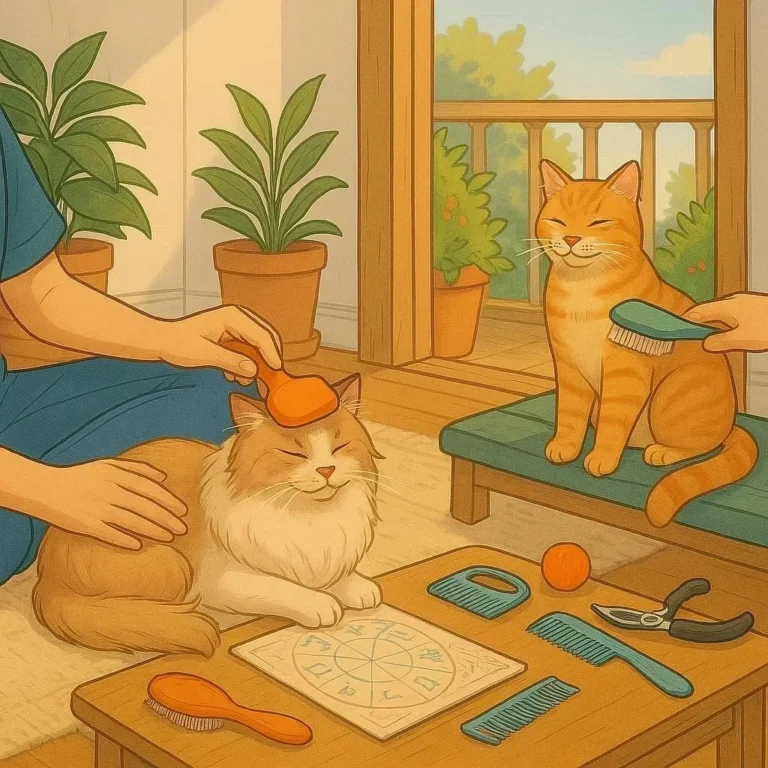
Grooming, gentle stroking and simply sitting together are also enrichment. Every cat has its own preferences, so let your cat decide how much contact it wants.
Scratching: A Must-Have Need
Scratching is not bad behaviour – it keeps claws healthy, stretches muscles and leaves scent marks. Provide at least one tall, stable scratching post that lets your cat stretch fully, plus a horizontal scratcher. Place them near sleeping areas and in prominent spots, because cats like to scratch where they are seen.
Signs Your Indoor Cat Needs More Enrichment
Watch for overgrooming, weight gain, constant meowing for attention, destructive scratching, night-time hyperactivity or aggression towards other pets. If you notice these changes, add more play and enrichment, and check with your vet to rule out medical causes. Choosing a breed that suits indoor life also helps; see our list of popular indoor cat breeds.
Creating a Weekly Enrichment Plan
It is easier to keep enrichment going when it is part of a plan. Many owners pick one “theme” a day: a new cardboard box on Monday, a puzzle feeder on Tuesday, a fresh pot of cat grass on Wednesday, a training session on Thursday and so on. Keep notes on which activities your cat enjoys most, and repeat those more often. Even ten minutes of focused attention each morning and evening can turn a bored indoor cat into a relaxed, playful companion.
FAQ
How much play does an indoor cat need?
Most indoor cats benefit from at least two short interactive play sessions a day, around ten to fifteen minutes each, plus toys for solo play.
Is it cruel to keep a cat indoors?
Indoor cats can live long, happy lives when their needs for play, climbing, scratching and company are met through enrichment.
Can I leave a laser pointer on for my cat?
Laser pointers can frustrate cats because there is nothing to catch. If you use one, end the game with a physical toy your cat can grab.
What is the cheapest way to enrich my cat’s life?
Cardboard boxes, paper bags with handles removed, scatter feeding and daily interactive play cost very little and work well.