Creating a Pet-Friendly Entryway With Comfort and Style
When you think about home design, the entryway often feels like a temporary hallway—something you rush through and never really notice. But for many pet owners, the first corner of their home is also the last place their furry privileges intersect before a full day of adventures. An entryway that welcomes both you and your dog or cat must balance safety, durability, and aesthetics while providing a cozy spot for your pet to relax.
Understanding the Purpose of a Pet-Friendly Entryway
- Livable transition zone: The entryway is the gateway between outdoor chaos and indoor calm. It should manage spillage, muddy paw prints, and stray objects.
- Safe haven: It must prevent common household injuries—cliff‑falling bowls, exposed hot surfaces, and small debris.
- Style statement: Even small spaces can reflect personality; a well‑styled door area can give your home a warm first impression.
The combination of comfort, style, and functionality is what creates a truly pet‑friendly entryway. Below you’ll find concrete strategies—backed by research and expert opinions from sources such as the Pet page on Wikipedia, the American Kennel Club, and the American Veterinary Medical Association—to help you redesign that space.
Flooring Matters: Soft, Durable, and Easy to Clean
Choosing the right flooring is perhaps the most critical decision. Pet feet can be hard on tile and hardwood, and many animals dislike slippy surfaces. Here are three top contenders:
1. Luxury Vinyl Plank (LVP)
- Reminiscent of natural hardwood but fully waterproof.
- Resistant to scratches from claws and heavy paw prints.
- Easy to wipe down with a damp microfiber mop.
2. Acrylic‑Infused Ceramic Tiles
- Add a subtle dimpled texture that grips paws.
- 100% water‑resistant and UV‑stable.
- Comes in a range of colors to match your décor.
3. Low‑pile Wool Rugs
- Ideal if you want a more traditional foyer.
- Soft for your pet’s paws and the baby’s sneakers.
- Requires regular vacuuming; consider a machine‑cleanable version.
Reference: The American Kennel Club recommends LVP for busy households because of its durability and low maintenance.
Low‑Profile Hardware for Safety
Traditional door frames and knobs can trap a curious tail or a dangling accessary. Adopt these safety upgrades:
- Slide‑down door handles: Allow easy pull without the bending needed for standard knobs.
- Rounded door corners: Install a soft‑edge trim or a door post guard.
- Floor‑to‑ceiling rail: A small wooden rail can divert pets climbing or the tendency of dogs to jump on the door step.
According to the American Veterinary Medical Association’s “Safe Home” guidelines, reducing sharp edges helps prevent lacerations during accidental slippage.
Weather‑Proofing & Ventilation
The entryway often bears the brunt of seasonal weather. Pet owners can use these adjustments:
- Weather bars: Install a horizontal bead at the floor level to prevent drafts from scratching the base of your pet’s shoulders.
- Canopy or retractable cover: Ideal for pet patios or outdoor feeders.
- Humidity‑reducing lights: LED strip lights with a moisture‑resistant cover keep the space readable while presenting a calming ambiance for anxious animals.
The University of Wisconsin Extension highlights that proper ventilation reduces mould spores—an essential consideration because pets can inadvertently introduce grass residue.
Accents: Where Comfort Meets Visual Appeal
Padded Dog Beds
- Choose a corner‑bedded mattress that complements your entryway’s color palette.
- Look for a removable cover that’s machine washable.
Reclining Cat Furniture
- A simple “catboard” placed against a wall can feel like a tiny balcony for your feline.
- Use natural fibers; cats love the texture of sisal and sisal mats.
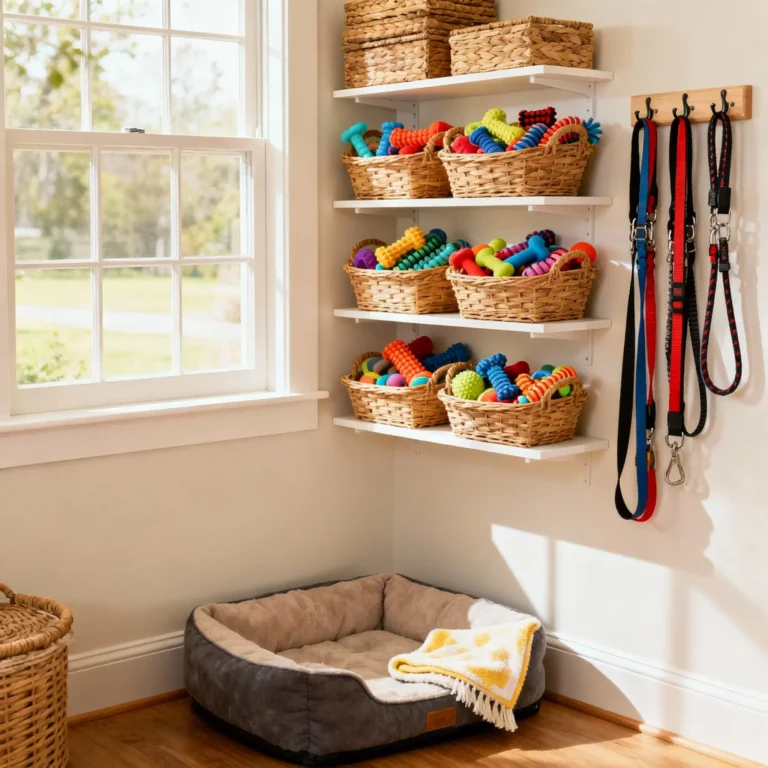
Decorative Baskets
- Open baskets can hold leashes, toys, or small grooming tools while acting as decorative nods.
- Nesting baskets let you keep items organized without cluttering surfaces.
Sources such as the Journal of Small Animal Practice state that a visual hierarchy—like a prominent plush area—helps pets orient themselves in new spaces.
Lighting: Subtle Yet Functional
- Motion‑sensor lights: Light up when someone steps in; they’re energy‑efficient and give pets reassurance.
- Under‑cabinet LED strips: Provide indirect illumination for reading labels on pet food.
- Seasonal color temperature: Warmer hues help incite calmness.
The American Institute of Architects underlines that good lighting reduces anxiety for all household members, including four‑legged ones.
Design Themes and Color Psychology
Earthy tones and muted greens feel grounding—great for those who prefer a nature‑inspired look. Conversely, cool blues can be spectral for collars and panting dogs.
Palette Ideas
- Mid‑century modern: Pair walnut trim with charcoal tile and a mustard‑colored pet mat.
- Rustic farmhouse: Use slate‑gray tiles, reclaimed wood, and a quilted plaid pet blanket.
- Minimalist chic: Clear glass and polished concrete bring a sleek feel with a calm cat‑friendly space.
When choosing motives, remember: Pets perceive colors differently. Blue feels cooler to many dogs, though cats tend toward motion rather than color.
Practical Storage Solutions for Pet Essentials
- Built‑in shelves: Keep toys, grooming kits, and first-aid supplies off the floor.
- Wall‑mounted hooks: Hang leashes, harnesses, and towels.
- Drawer units: Small, lockable drawers keep dangerous items out of reach.
The American Kennel Club recommends the latter for insurance purposes, stating that reduced hazards lead to fewer micro‑injuries over time.
Integrating Smart Technology
- Pet‑friendly smart doorbells: Some models allow you to see who’s at the door and their pet’s size through a camera lexer.
- Automatic feeders: Timed meals keep the entryway neat and enforce consistent schedules.
- Temperature sensors: Alert you if the foyer becomes too cold for a dog that isn’t well insulated.
These devices are not just trends; they can actively promote well‑being. According to Pet Tech Quarterly, households that incorporate smart tools report a 30% drop in anxiety complaints.
Maintenance Tips for Longevity
- Routine cleaning: Spot‑clean spills within minutes to prevent stains. Weekly sweep or vacuum removes dander and contaminants.
- Repair promptly: If you notice a loose plank or a cracked tile, fix it to avoid pets slipping.
- Use mats: Place a high‑traction rug near the door to catch mud.
- Check for allergens: Debris can become a breeding ground for mites; frequent washing of pet beds staves off allergies.
Reference: The American Veterinary Medical Association emphasizes the importance of hygiene in pet‑friendly zones to reduce the transmission of zoonotic parasites.
Conclusion: A Secure, Stylish, and Pet‑Ear‑to‑Your‑Heart Entryway
A pet‑friendly entryway isn’t a trade‑off between safety and design—it’s a harmonious blend that reflects your lifestyle and your pet’s needs. By selecting the right flooring, focusing on low‑profile hardware, enriching with comfortable décor, and optimizing lighting and storage, you launch each day from home as easily and safely as you would from any other living space.
Ready to transform your foyer?
Reply to this email or comment below with your favorite pick for a flooring option. For a personal consultation and a free design mood board, sign up through our website. Let’s make your home a truly welcoming area for both you and your four‑legged friend.