Best Cage and Habitat Ideas for Small Pets
When it comes to creating a happy and healthy environment for your small pets, the right cage or habitat is essential. Whether you’re a seasoned pet owner or a newcomer to the world of small animals, selecting the perfect enclosure can make a significant difference in your pet’s well-being and your overall satisfaction as a caregiver. In this blog post, we’ll dive into the best cage and habitat ideas for small pets, covering everything from guinea pigs and hamsters to rabbits and more. By the end of this guide, you’ll be equipped with the knowledge to create a safe, comfortable, and engaging space for your furry or feathered friend.
Understanding the Needs of Small Pets
Before we explore the best cage and habitat ideas, it’s crucial to understand the specific needs of your small pet. Different animals have different requirements when it comes to space, exercise, and environmental conditions. Here are some key factors to consider:
- Space and Movement: Small pets like rabbits and guinea pigs need ample space to move around, stretch, and exercise. Conversely, smaller animals like hamsters and gerbils may thrive in well-ventilated, multi-level cages with plenty of opportunities for climbing and exploration.
- Ventilation: Proper airflow is vital for the health of your pet. Poor ventilation can lead to respiratory issues and the buildup of harmful bacteria.
- Temperature Control: Many small pets are sensitive to temperature extremes. Ensuring that their habitat remains within a safe temperature range is essential for their comfort and health.
- Enrichment: Bored pets can become stressed or develop behavioral problems. Incorporating toys, tunnels, and hiding places into their habitat can keep them happy and stimulated.
Best Cage Ideas for Small Pets
Now that we’ve covered the essential needs of small pets, let’s take a look at some of the best cage and habitat ideas that cater to these requirements.
1. Spacious Rabbit Hutches
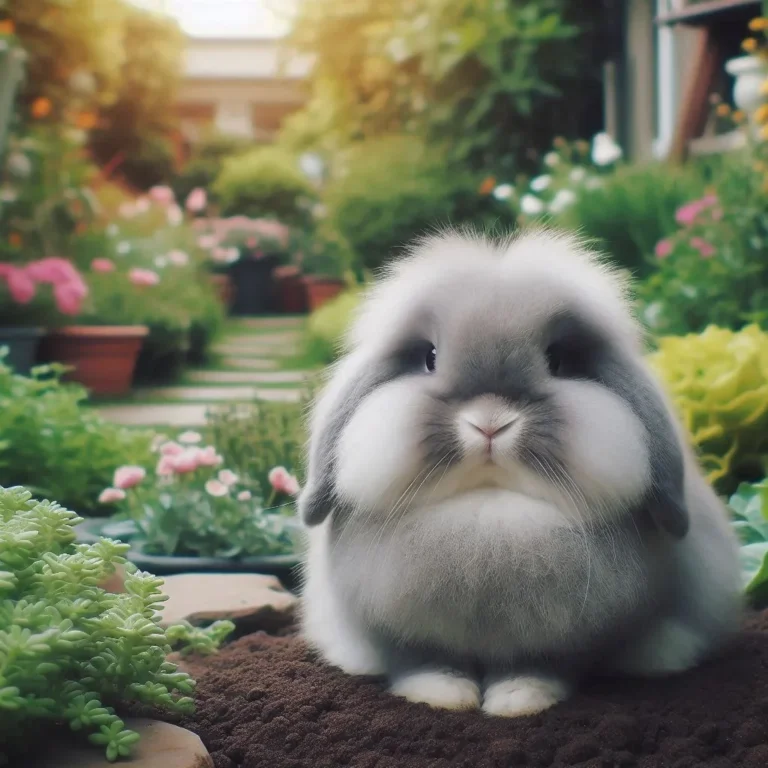
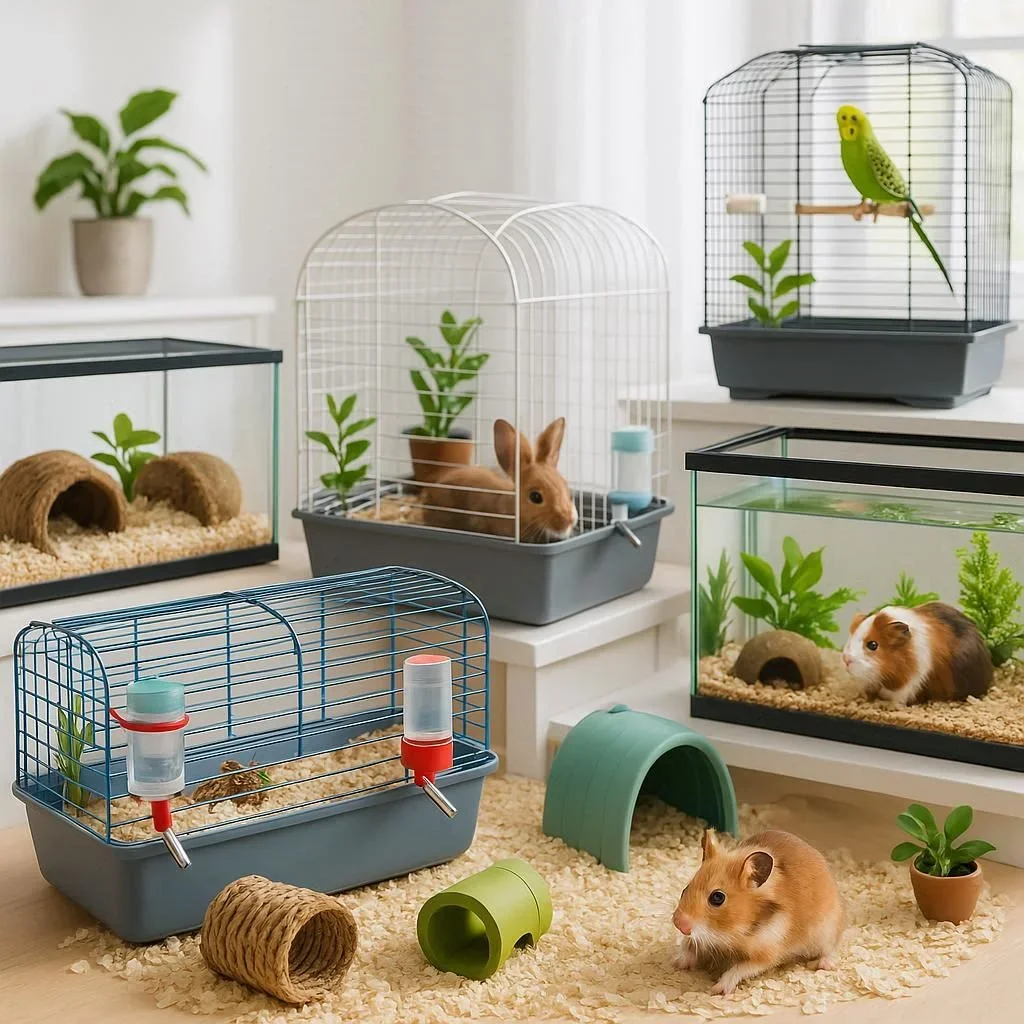
Rabbits are active animals that require plenty of space to hop around, stretch, and exercise. A spacious rabbit hutch with multiple levels can provide your pet with the room it needs to stay happy and healthy. Look for a hutch with a solid bottom, as rabbits are prone to foot problems and can injure themselves on wire mesh. Adding soft bedding like wood shavings or hay will make the hutch more comfortable.
In addition to the hutch itself, consider attaching a secure, predator-proof run where your rabbit can safely graze and explore. This outdoor space should be shaded to protect your rabbit from direct sunlight and equipped with hiding places to reduce stress.
2. Multi-Level Hamster and Gerbil Cages
Hamsters and gerbils are natural climbers and burrowers, so a multi-level cage with tunnels, ladders, and hiding places can provide them with plenty of opportunities for exercise and play. Look for a cage with a large base to accommodate plenty of bedding material, as these small animals love to dig and burrow.
When choosing a cage for your hamster or gerbil, opt for one with a solid bottom, as wire mesh can injure their tiny feet. A front-opening cage or one with a removable top can make cleaning easier and allow you to interact with your pet more easily. Adding toys like wheels, chew toys, and tunnels will keep your hamster or gerbil entertained and active.
3. Guinea Pig Cages with Deep Bedding
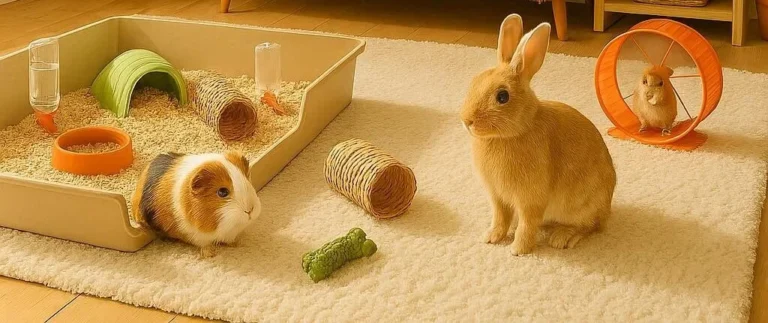
Guinea pigs are social animals that thrive in pairs or small groups, so a spacious cage is essential to accommodate multiple pets. Look for a cage with a large floor area and deep bedding to allow your guinea pigs to burrow and move around comfortably. A cage with a lid or top can help prevent escape attempts and keep predators out.
Guinea pigs are prone to health issues related to their respiratory system, so good ventilation is crucial. Choose a cage with plenty of airflow and keep it in a well-ventilated area of your home. Adding hiding places, tunnels, and toys will help reduce stress and keep your guinea pigs entertained.
4. Ferret-Proof Cages
Ferrets are known for their curiosity and love of exploration, so their cages need to be secure and escape-proof. Look for a ferret-proof cage with sturdy construction, secure latches, and no gaps or openings that your ferret could exploit.
Ferrets are also excellent climbers, so a multi-level cage with plenty of space to climb and play can keep them entertained. Adding toys like tunnels, balls, and interactive games will help keep your ferret stimulated and prevent boredom. Since ferrets can be messy, a cage with easy cleaning features and a pull-out tray can make maintenance simpler.
5. Bird Aviaries for Feathered Friends
If you’re the proud owner of a small bird, such as a parakeet, cockatiel, or canary, a spacious aviary is essential for their well-being. Birds require plenty of space to fly, stretch their wings, and exercise, so a large cage or aviary with horizontal bars is ideal. Look for a cage with a wide, deep design to allow your bird to move around comfortably.
In addition to the cage itself, consider adding perches, swings, and toys to keep your bird entertained. Including a nesting box or two can provide your bird with a safe and cozy place to rest. Keeping the aviary clean is important for your bird’s health, so choose a cage with easy cleaning features and a removable tray.
6. Custom DIY Habitats
If you’re looking for a unique and personalized habitat for your small pet, consider building a custom DIY enclosure. This approach allows you to tailor the space to your pet’s specific needs and preferences, creating a one-of-a-kind environment that promotes health and happiness.
One popular DIY project is converting a wooden chest or plastic storage bin into a habitat. Line the bottom with a layer of bedding material, add hiding places and toys, and ensure proper ventilation. For more ambitious projects, consider building a custom aviary or hutch using materials like wood, metal, and wire mesh.
When building a DIY habitat, safety should always be your top priority. Ensure that all materials are non-toxic and free from sharp edges or hazards. Research your pet’s specific needs and incorporate features that cater to their behavior and preferences.
7. Terrariums for Small Reptiles
If you’re the owner of a small reptile, such as a gecko or bearded dragon, a well-designed terrarium can provide your pet with a comfortable and engaging environment. Look for a terrarium with a secure lid to prevent escape and adequate ventilation to maintain proper humidity and temperature levels.
Incorporate substrate, rocks, plants, and hiding places to create a naturalistic environment that mimics your reptile’s natural habitat. Adding a heat source and UVB lighting is essential for maintaining proper temperature and promoting calcium metabolism. Research your specific reptile’s needs to ensure that the terrarium is set up correctly for their species.
Key Considerations for Small Pet Habitats
When choosing or building a habitat for your small pet, there are several key considerations to keep in mind. These factors will ensure that your pet’s environment is safe, comfortable, and conducive to their overall well-being.
- Size: The size of the habitat should be appropriate for the size and number of pets you’re housing. Overcrowding can lead to stress and health issues, while a habitat that’s too small can restrict movement and exercise.
- Safety: Ensure that the habitat is free from hazards, such as sharp edges, toxic materials, or gaps that your pet could escape through. Secure latches and sturdy construction are essential for keeping your pet safe and secure.
- Ventilation: Proper airflow is crucial for maintaining a healthy environment. Poor ventilation can lead to respiratory issues and the buildup of odors. Choose a habitat with good airflow and keep it in a well-ventilated area.
- Cleanliness: Regular cleaning is essential for maintaining a healthy habitat. Look for habitats with easy cleaning features, such as removable trays or front-opening doors. A clean habitat will help prevent the buildup of bacteria and odors.
- Enrichment: Incorporating toys, tunnels, and hiding places into your pet’s habitat can keep them entertained and reduce stress. Rotate toys regularly to keep your pet interested and engaged.
- Temperature Control: Many small pets are sensitive to temperature extremes, so it’s important to ensure that their habitat remains within a safe temperature range. Research your pet’s specific temperature requirements and take steps to regulate their environment accordingly.
- Location: The location of your pet’s habitat within your home can also impact their well-being. Avoid placing the habitat in areas with drafts, direct sunlight, or high humidity. Keep it away from noisy areas to minimize stress.
Conclusion
Creating the perfect habitat for your small pet is a rewarding experience that can greatly enhance their quality of life. Whether you’re looking for a spacious rabbit hutch, a multi-level hamster cage, or a custom DIY enclosure, there are countless options available to suit your pet’s specific needs. By considering factors like space, ventilation, safety, and enrichment, you can create an environment that promotes health, happiness, and well-being. Remember to research your pet’s specific requirements and invest in a high-quality habitat that will provide them with a safe and comfortable home for years to come. With the right cage or habitat, you can help your small pet thrive and enjoy a fulfilling life as a beloved member of your family.